What is Snug.com?
Snug.com provides Snug Match; a SaaS product for Property managers, real estate agencies and self-managed owners to select the best tenants for their rental properties. For everyday consumers Snug provides an online rental application form designed to be re-usable for future applications.
Context
As the first and only design hire at Snug.com, my responsibilities included a design review, establishing a design system, re-designing some key features, and conducting research. In addition I also helped with marketing and crunching analytics. That's a lot! Welcome to the startup world.
Design Foundations
Problems
Prior to my start, Snug had focused on shipping features to meet the requests of Property Managers who were on the fence of signing up to paid plans. This meant that:
- Speed and delivery were prioritised over consistency and the overall user experience
- Design pattern documentation or copy guidelines were minimal or non-existent
What I did
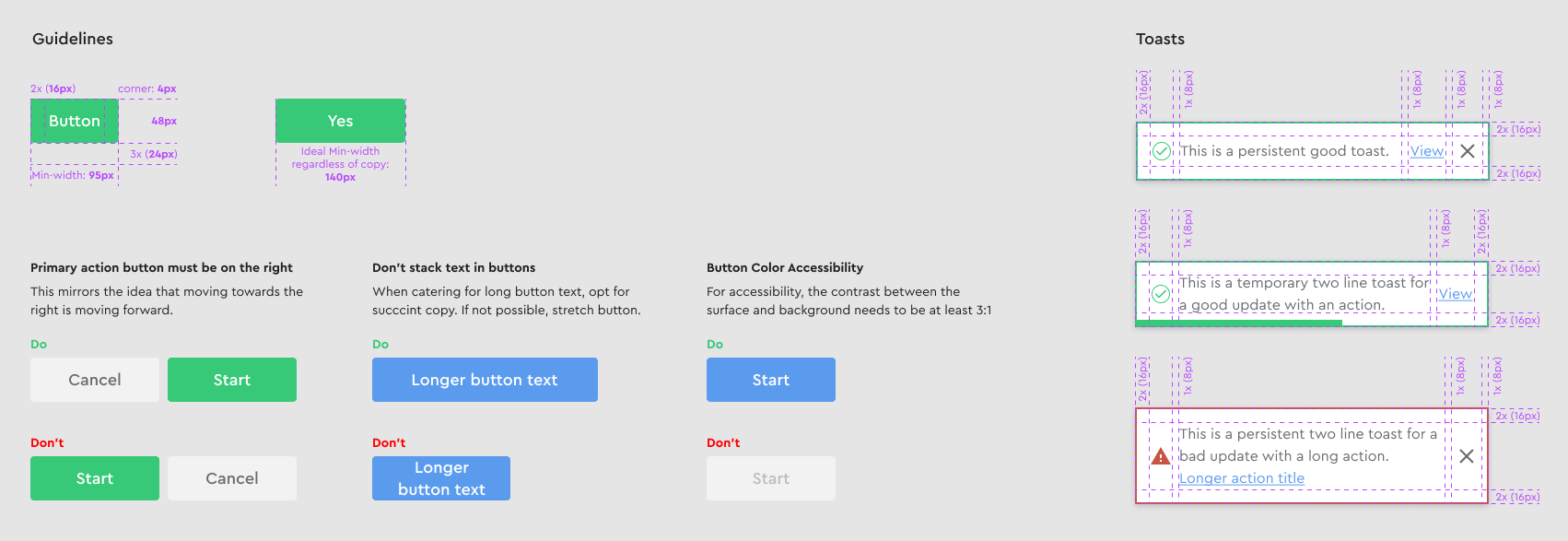
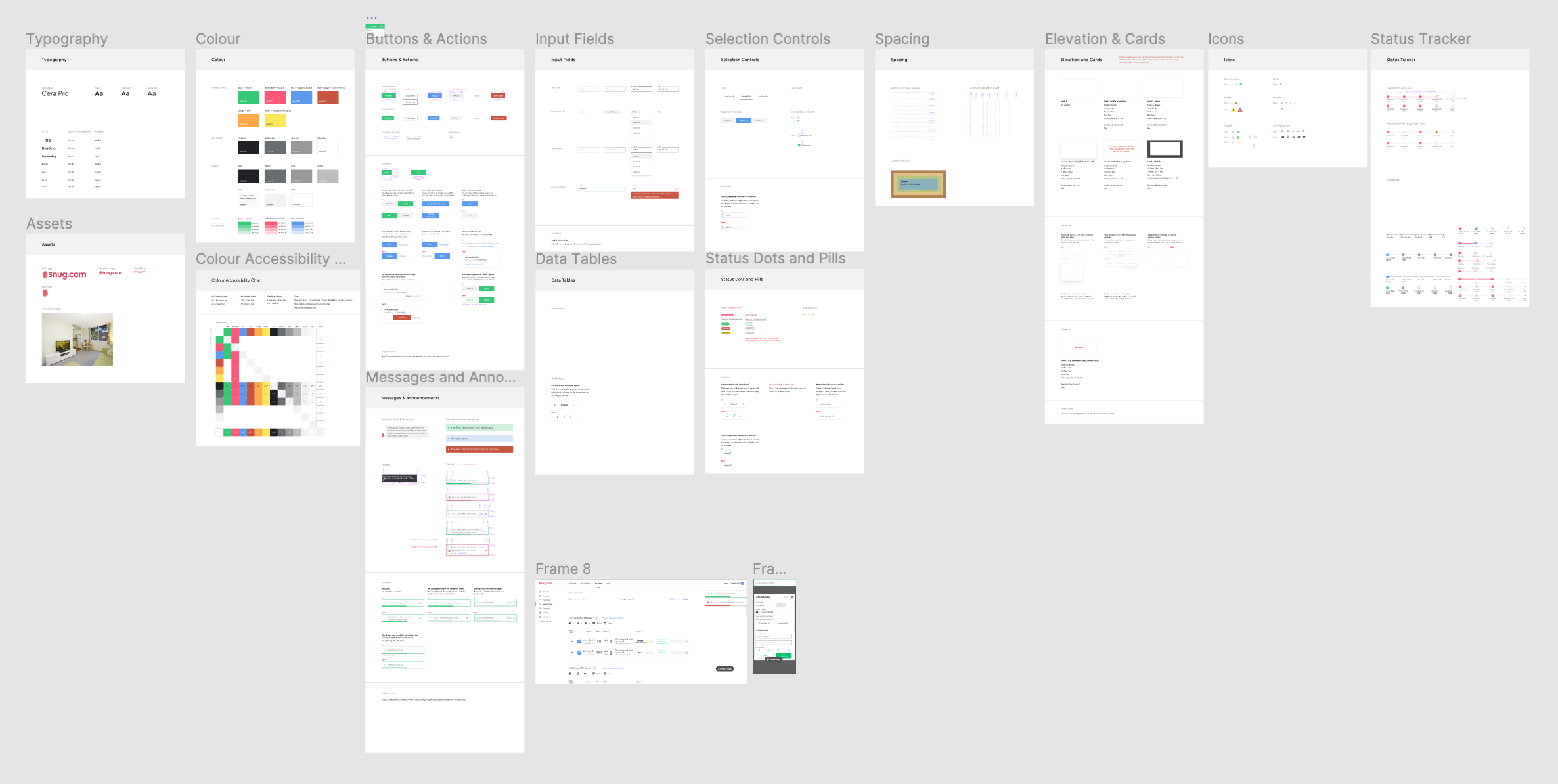
Snug was using an online out-of-the-box pattern library template. To be efficient, I updated the patterns in Figma with corresponding guidelines. I started with foundational components buttons, text, colors and color combination accessibility that would be used frequently.
Challenge: Limited Dev Resources
I had to collaborate with the team on weaving pattern updates into the roadmap as dedicated time for re-working patterns was not cost-effective.
Challenge: Design Debt
Existing patterns were inconsistenly applied and often not fit for purpose. For example, there were numerous button styles and the primary was not fully accessible so reduction and isolation of "green" were trade-offs I applied.
Feature Uplift: Application Processing
Problems
Processing rental applications is a key user task performed on Snug Match and the existing design had the following experience issues:
- It took too long for Property Managers to assess each application, switch between applications, and compare applications
- The application forms were lengthy, did not offer easy navigation, and did not assist Property Managers to complete their tasks more effectively
Testing, Iterating and Design
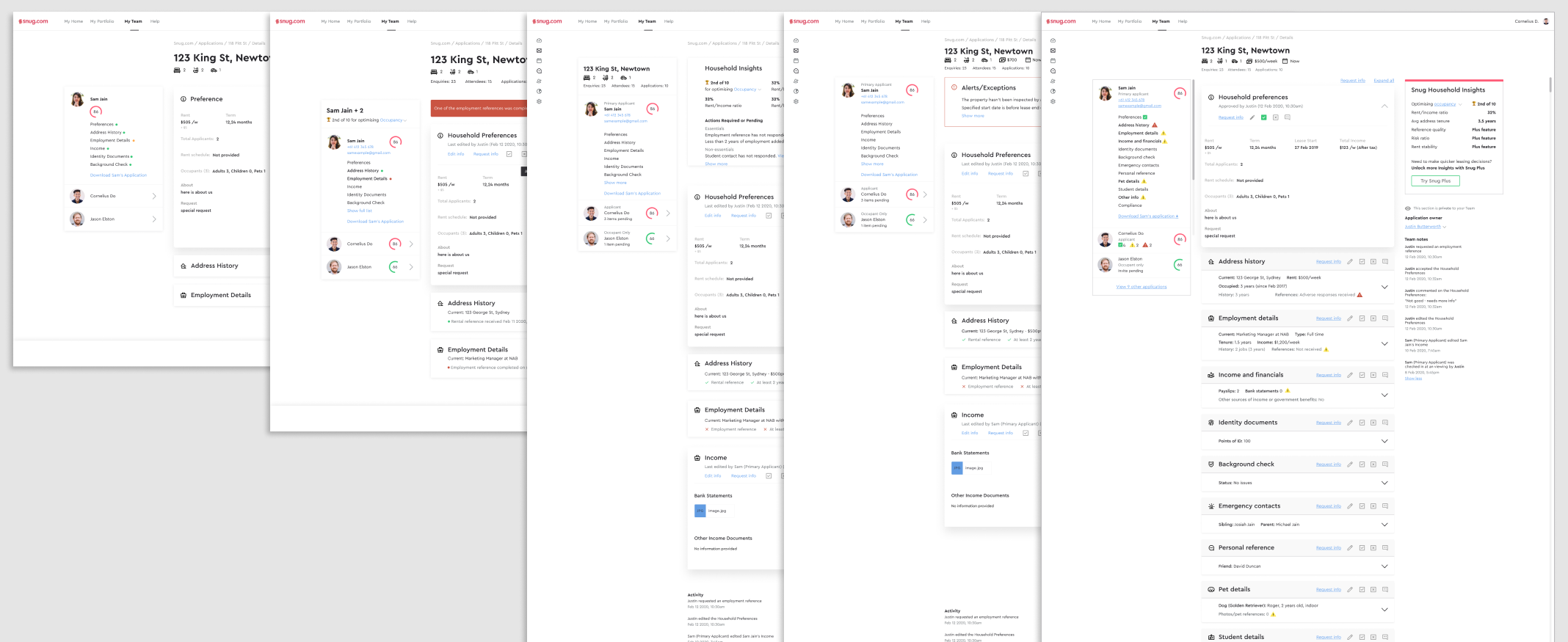
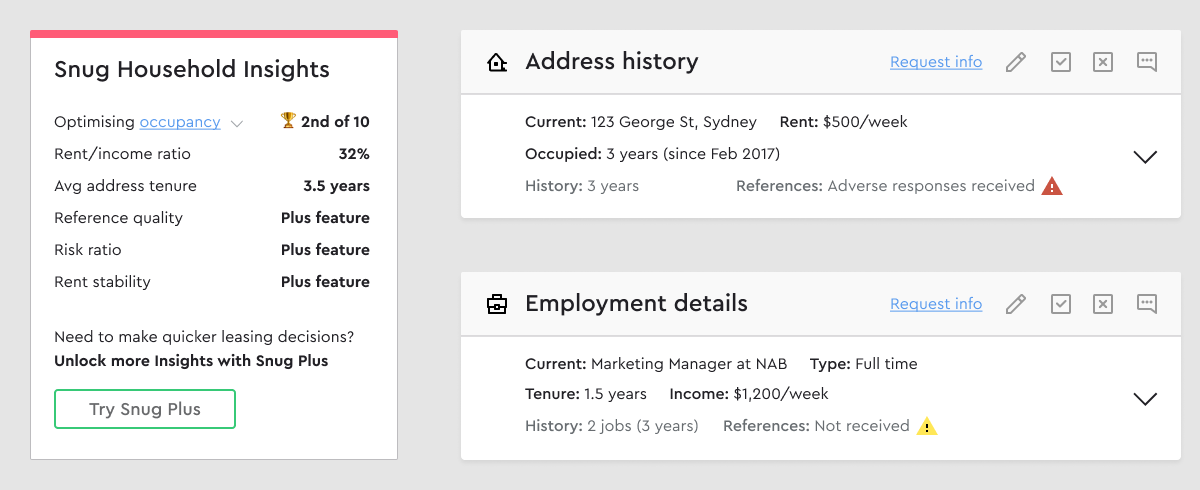
After initial sketches and ideation, I tested the prototype in person and over video calls with our customers to understand pain points and refine the designs. Below are images of the previous state and the newly designed state as well as my iterations.
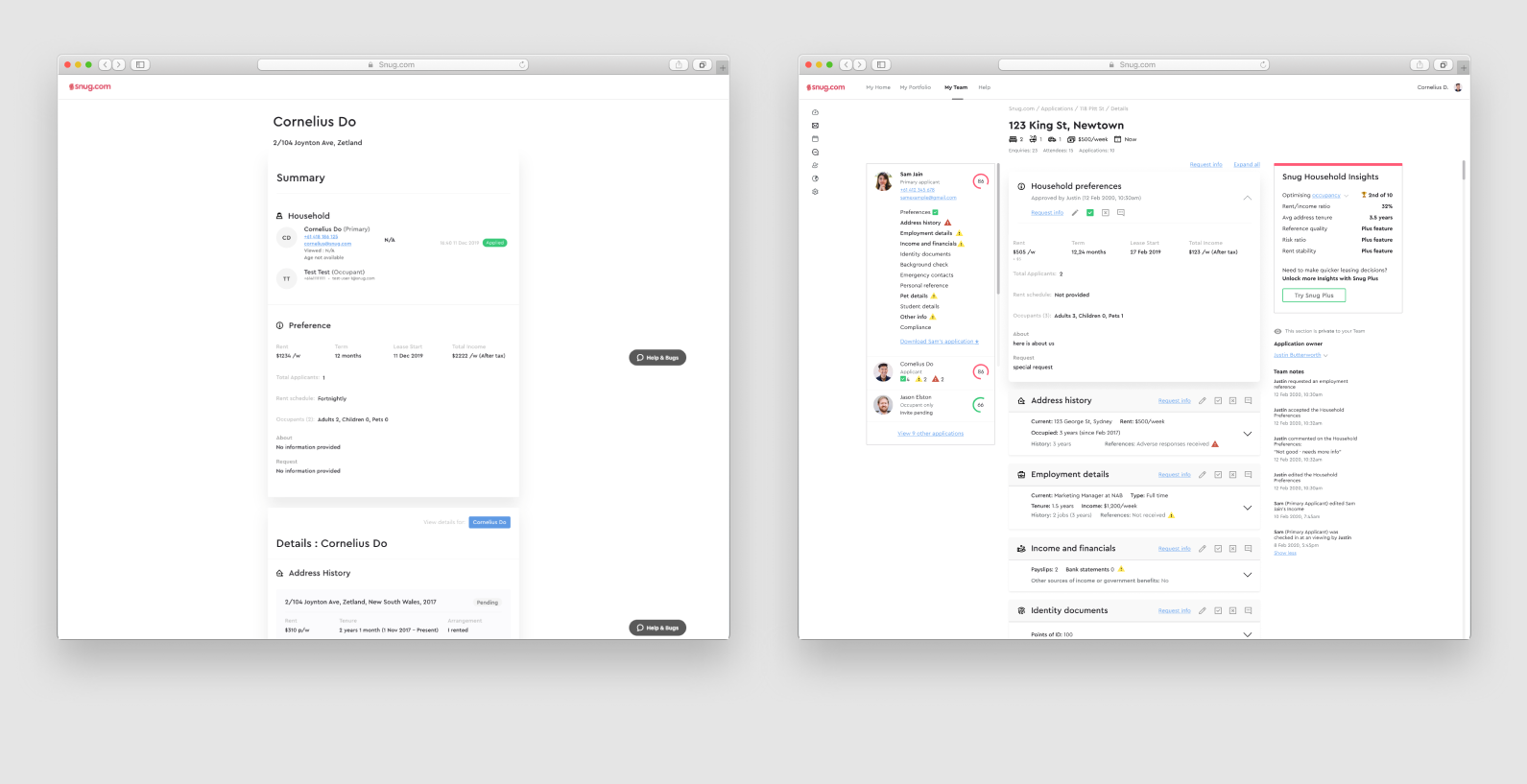
Helping users complete their task
- From interviews, I found key information that Property Managers were already using as heuristics and included them above the fold
- I introduced accordions with high level summaries allowing them to manage by exception instead of seeing everything
Navigation
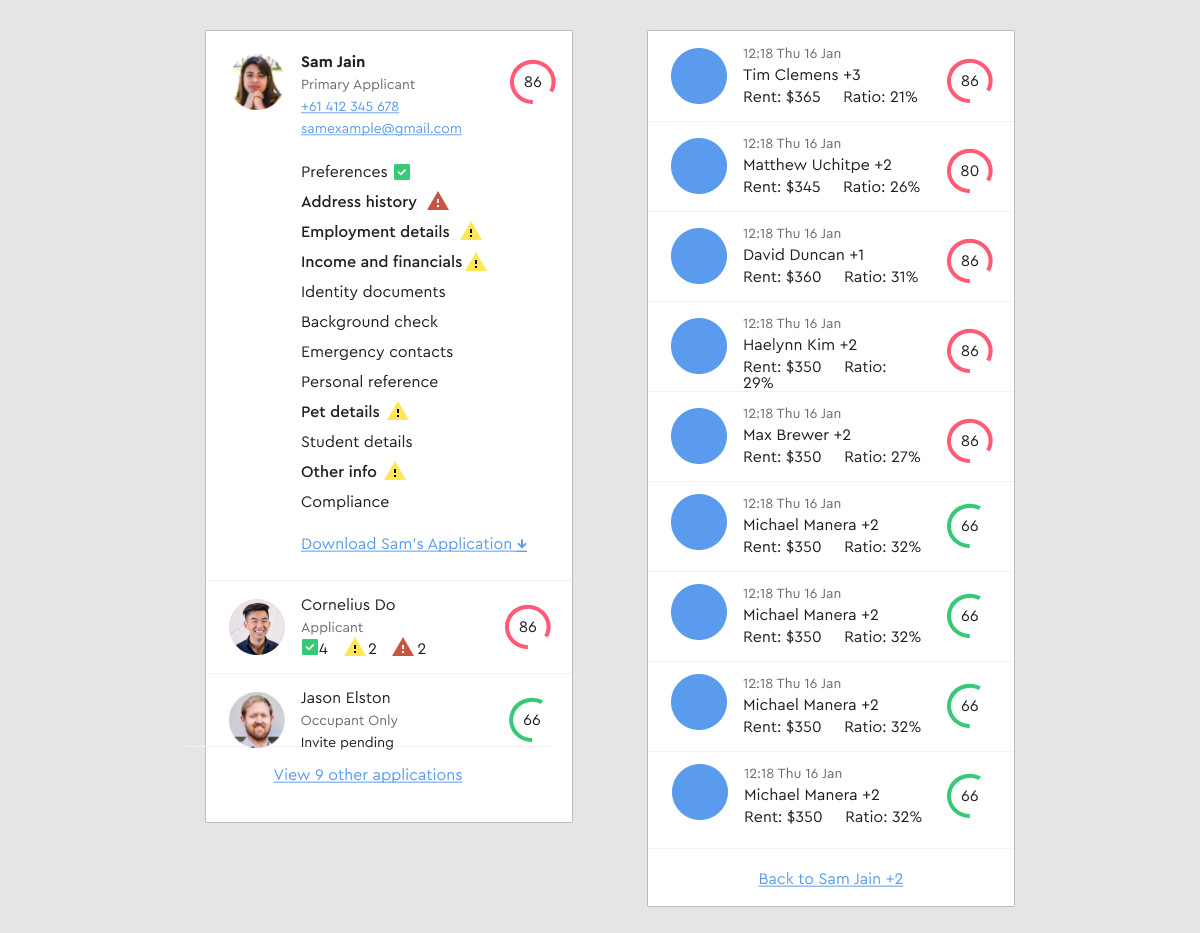
Scrolling and context switching fatigue were major pain points for our users.
- The navigation panel (left) allows for less scrolling and includes alert icons to help Property Managers manage by exception and quickly see what requires their attention
- The other applications (right) allows for Property Managers to quickly assess competing applicants without switching their contexts
COVID-19 Response
Problems
As the COVID-19 situation ramped up in Sydney, the rental market and property management industry experienced a lot of significant changes - requiring rapid changes the user experience on Snug. These experience changes allowed Snug to adapt to the new normal of private viewings, high levels of discretion and reduced confidence.
What I did
After requirement gathering from key clients and the CEO, I provided designs that might not have been the prettiest visual design, but helped us adapt to the changing climate.
Facilitating Private Viewings
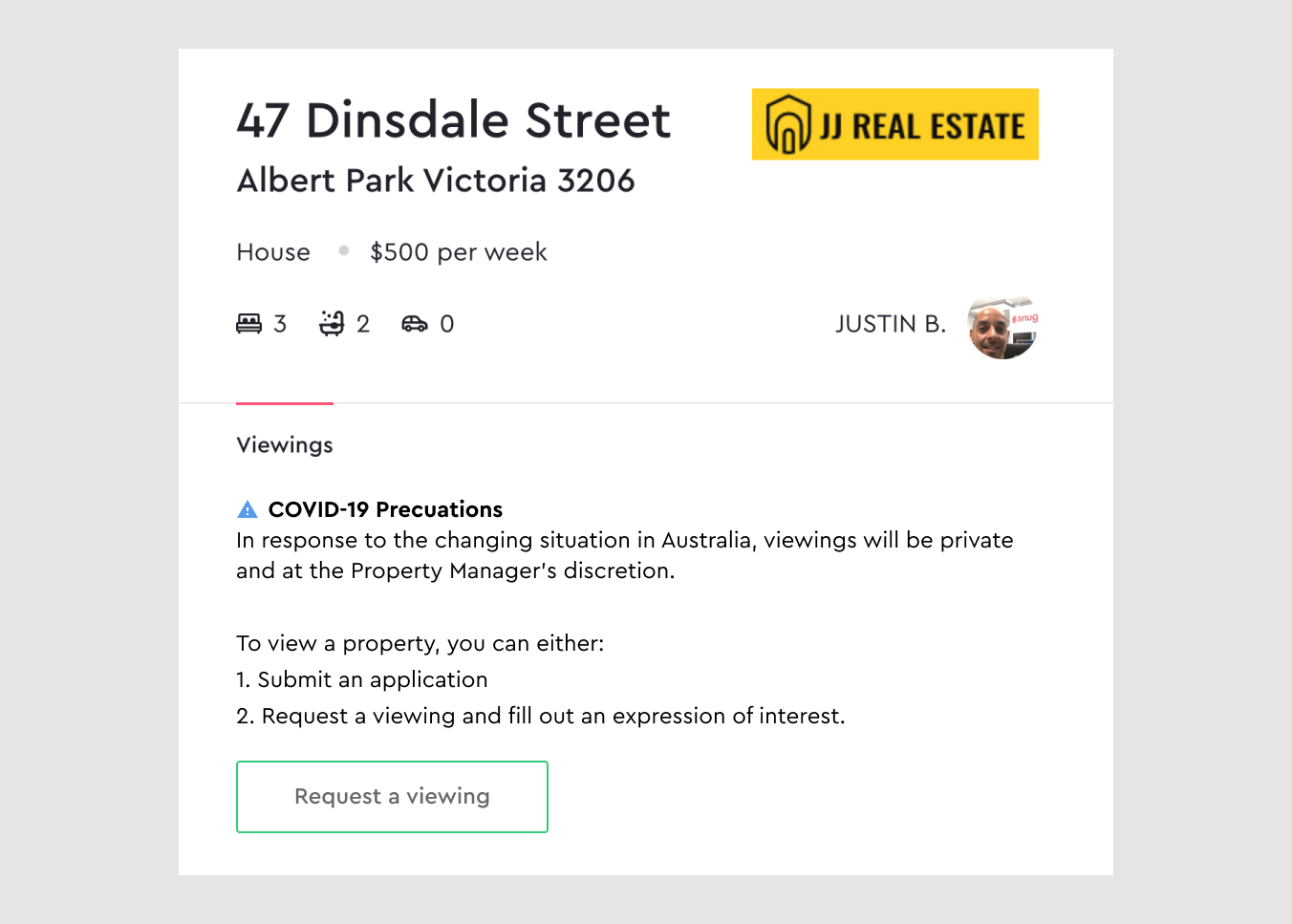
We helped Property Managers and renters adapt to the new normal by allowing for private viewings and nudged renters to submit complete applications first since Property Managers were now more selective.
Renter Declaration
As a safety measure and reminder to the community, we implemented a declaration when requesting a private viewing.
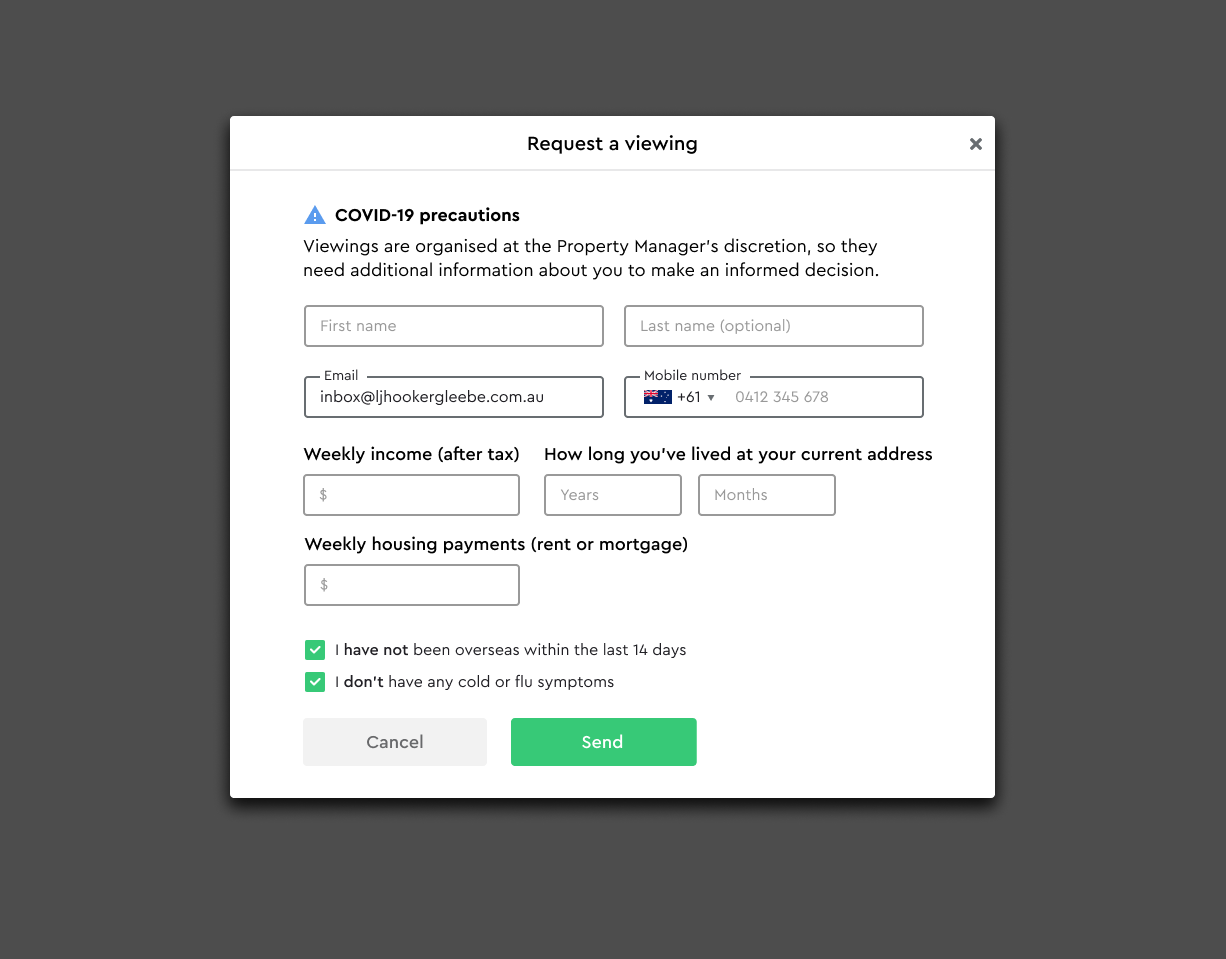
Informed Decisions for Property Managers
As Property Managers would still be having direct contact with the general public, we included a quick hack to let them know what a renter had declared about their health. This would hopefully allow them to make more informed decisions about who to provide private viewings for.
